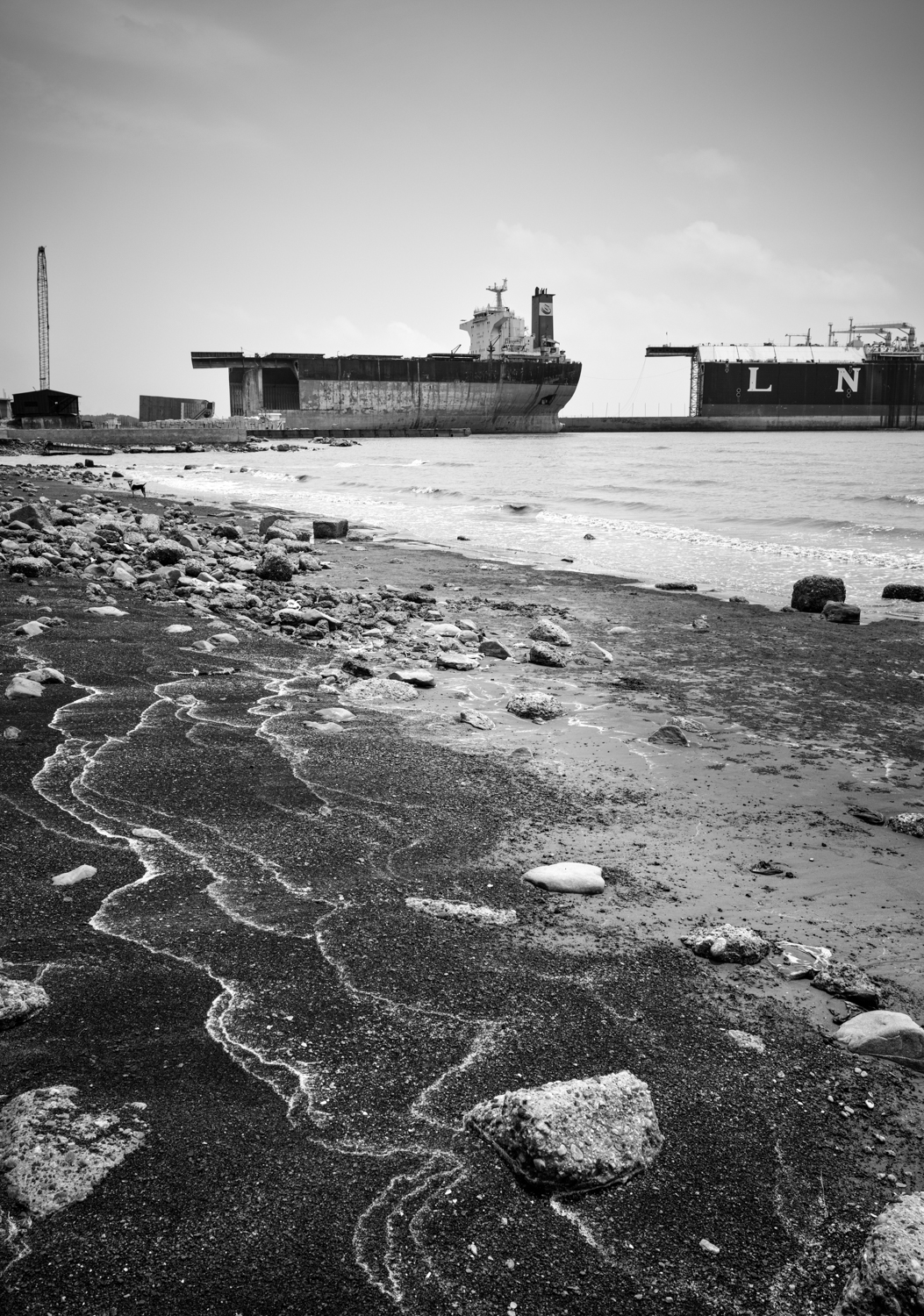
Chittagong, or in Bangla, Chattogram; home to the ship breaking yards, celebrated or exposed by Sebastiao Salgado in 1989 and later reviled for environmental and human rights abuses.
The industrial beaching and dismantling of giant tankers, ferries and container ships; dismantled on a human scale, by hand. Workers wearing flip-flops and using oxyacetylene cutting tools in noxious conditions – with the resultant threat to life; and to the environment and sea life – with oil, steel chips and other pollutants flowing unrestricted into the sea.
Today, the scale of the industry appears smaller, fewer working yards and greater government scrutiny, at least on the surface. I saw workers in orange jumpsuits and yellow wellies; and signs saying child labour is discouraged. But for visitors the practices are driven underground, or at least behind closed doors.
Many yards have clearly cleaned up their act, if not what they discharge into the sea, but neither letter-writing in advance, local contacts nor local inducements on the gate yielded me access to see for myself.
And whatever happens now, how long before the long term damage is undone? Old women squat under umbrellas on the beach, scouring the ground not for seafood but for tiny nuggets of metal – iron filings from the cutting of once proud ships.
There are subsistence fishermen here, farming the shallows for crabs and prawns that have fed in these black-sand waters – the seafood is fantastic in Bangladesh – and exported worldwide…